
Article published in Crane Brazil magazine nº 100. Access here!
The use of wire rope slings bent over the body (forming two parts) is a common practice in cargo lifting dating back to the 19th century. Although it offers strategic advantages, such as length adjustment and capacity gain, the technique requires precise calculations of strength loss due to bending and compliance with international standards (ISO 19901-6, DNV ST-N001).
Benefits: Why bend the sling?
Capacity Increase: Allows for raising the Working Load Limit (WLL) of the assembly compared to a single-leg sling.
Length Adjustment: Permits reducing the sling length by half (with one bend) or by specific values with multiple bends.
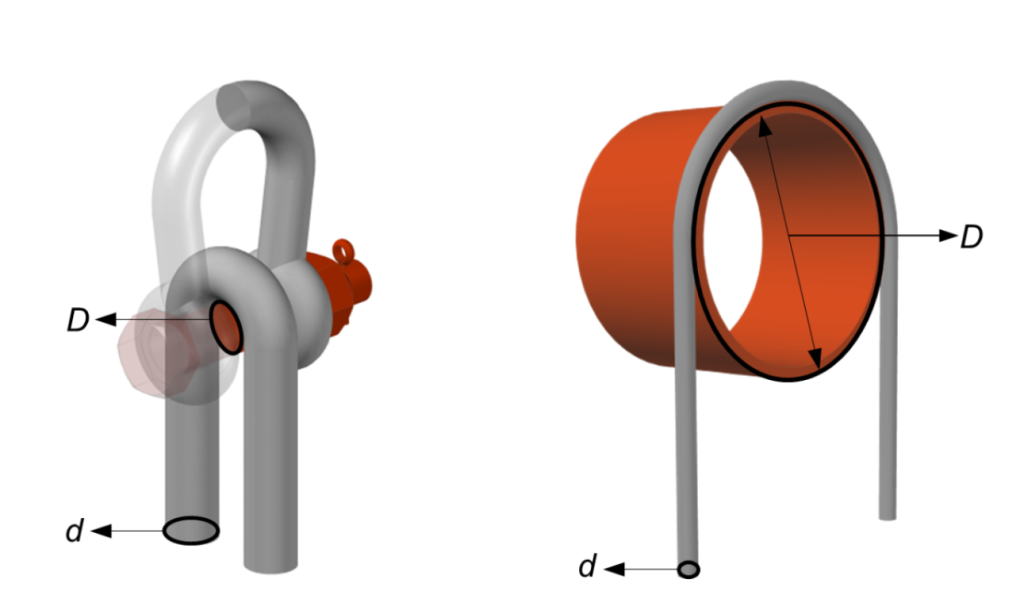
Calculations and Efficiency (kbe): The efficiency of the bent sling is influenced by the severity of the bending at the fold section. For cable classes 6×19 and 6×36, the efficiency factor (kbe) is calculated by the formula:
Kbe = 1 –
Where:
- D: Bending diameter (e.g., pin diameter, shackle body, or roller).
- d: Nominal diameter of the wire rope.
To calculate the new bent Working Load Limit (WLLbe):
WLLbe = 2 * WLLsling * kbe
Note: In applications with rollers, the 45:55 load distribution factor can be waived, optimizing the result.
D/d Ratio Limits:
- Avoid permanent deformation: Minimum D/d >= 4.0.
- Bend in the eye (Limit): Permissible D/d < 2.5.
- Bend in the eye (Recommended): Minimum D/d >= 2.0.
- Bend in the sling body: Minimum D/d >= 2.5.
- Total Prohibition: D/d < 1.0.
Technical Guidelines and Considerations
Bending at a constant point: To prevent premature material fatigue at multiple points, the rope should always be bent in the same position.
Capacity increase: By using a bent sling, it is possible to achieve a load increment of approximately 40%. This gain is enhanced by the use of rollers, since an isolated shackle pin has a reduced diameter, which penalizes the final strength.
Increased inspections: Due to mechanical stress in the bending zone, the frequency and rigor of inspections must be greater in this specific area.
Length reduction: In addition to the load gain, bending by the body is a practical solution to reduce the operational length of the sling by half.
Permanent deformation: It is fundamental to foresee that, whenever the D/d ratio is less than 4.0, the rope will present a slight permanent deformation in the bending region.
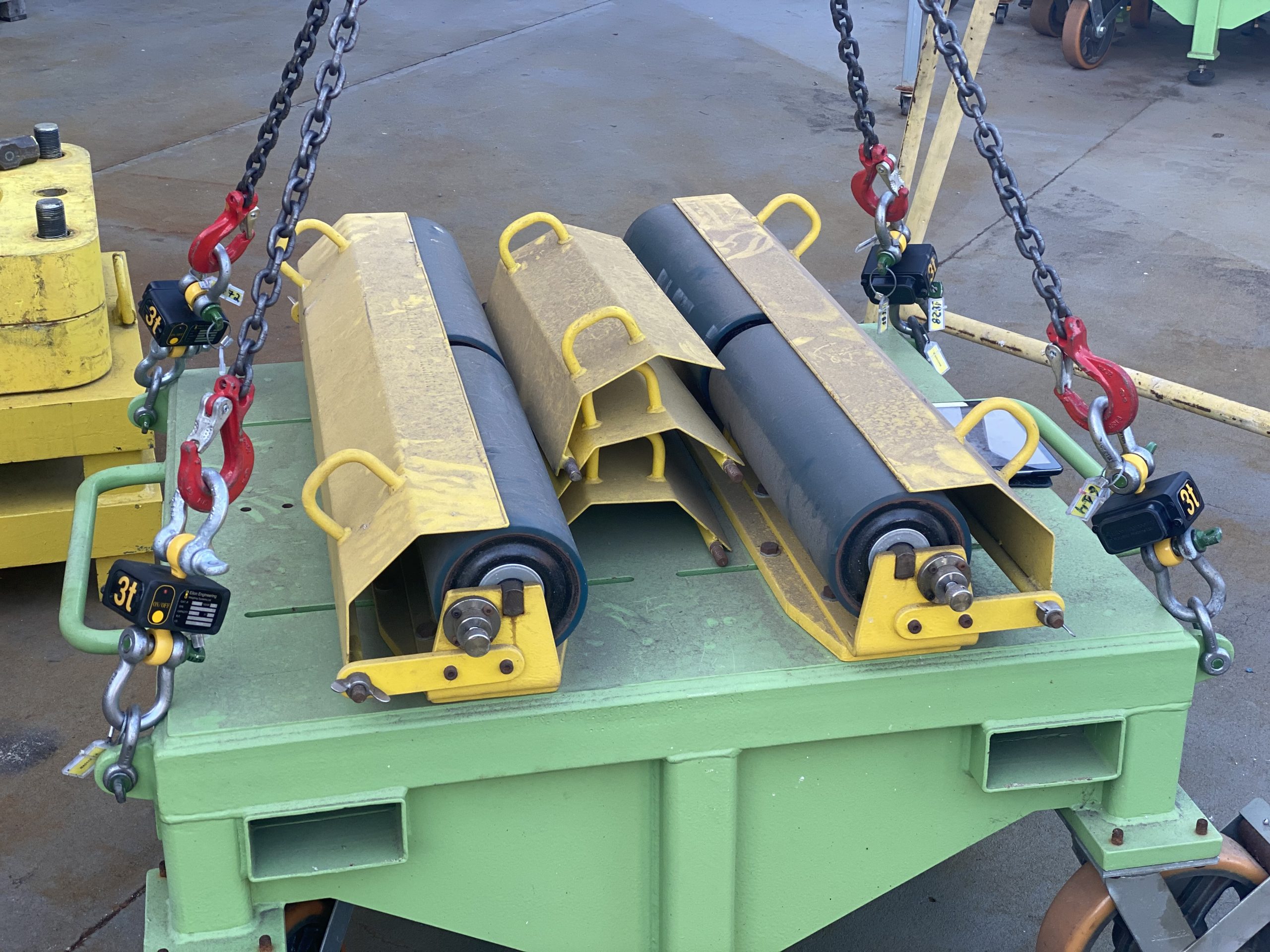
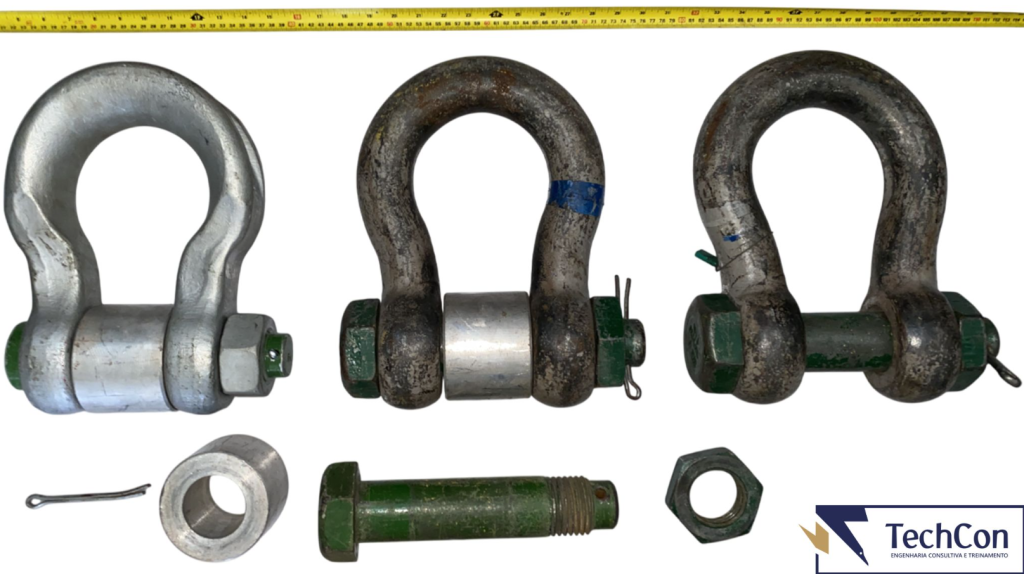
Rollers and pins: If the shackle pin diameter is insufficient for a good bending ratio, rollers should be used. It is worth noting that opting to bend on the shackle body makes the use of rollers unfeasible, resulting in a smaller bending diameter.
Thimble usage: The application of thimbles in the eyes is highly recommended to ensure internal protection and the longevity of the wire rope.
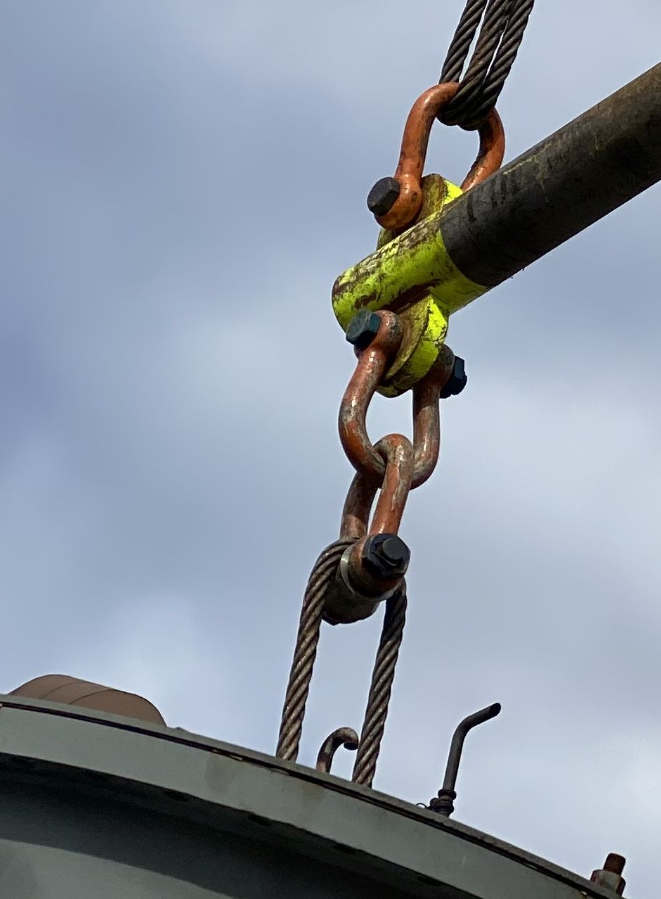
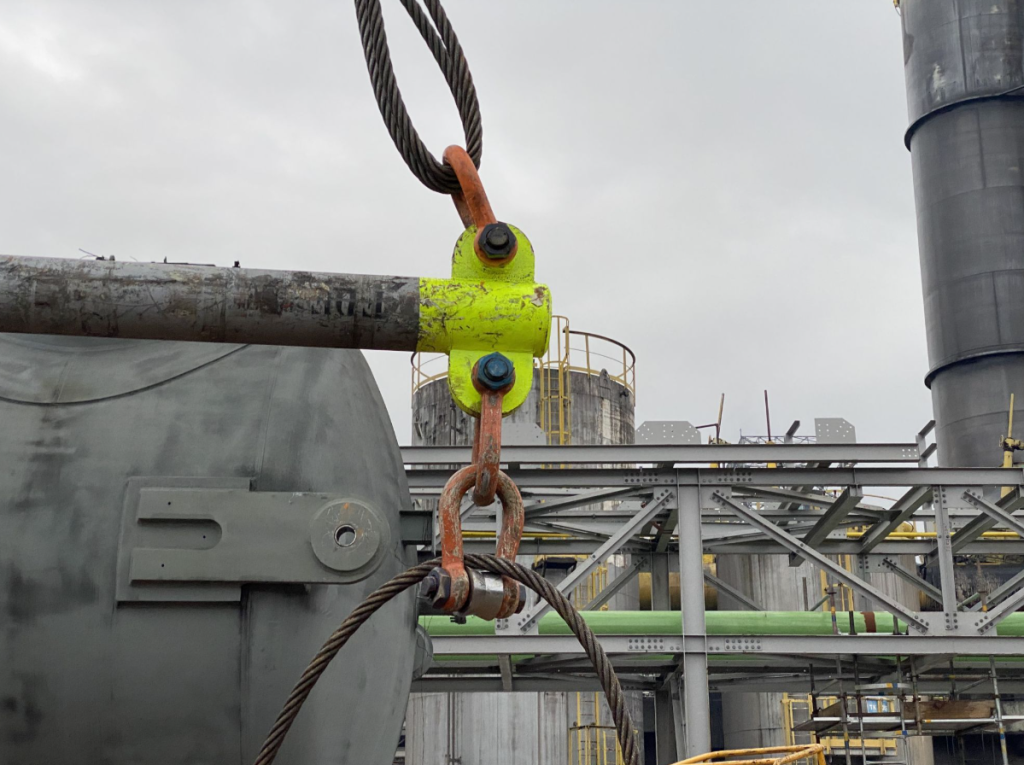
Wide-body shackles: These components should have priority in the design. An efficient alternative to using rollers is the direct connection of a wide-body shackle to the lower eye of the spreader beam.
WLL calculation: The dimensioning of the Working Load Limit must, mandatorily, consider the strength reduction based on the D/d ratio (ratio between the bending diameter and the rope diameter).
The Role of Rollers in Sling Centering and Protection
The choice of roller profile is a fundamental design detail to ensure that the load is correctly distributed and that the lifting accessory has its service life preserved.
Design Guidelines for Rollers
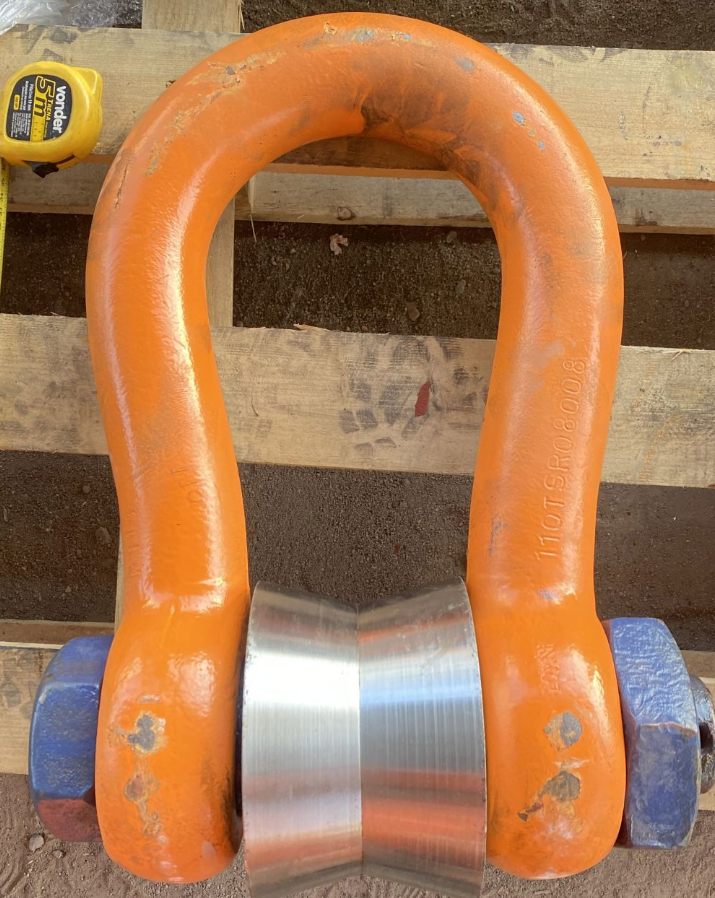
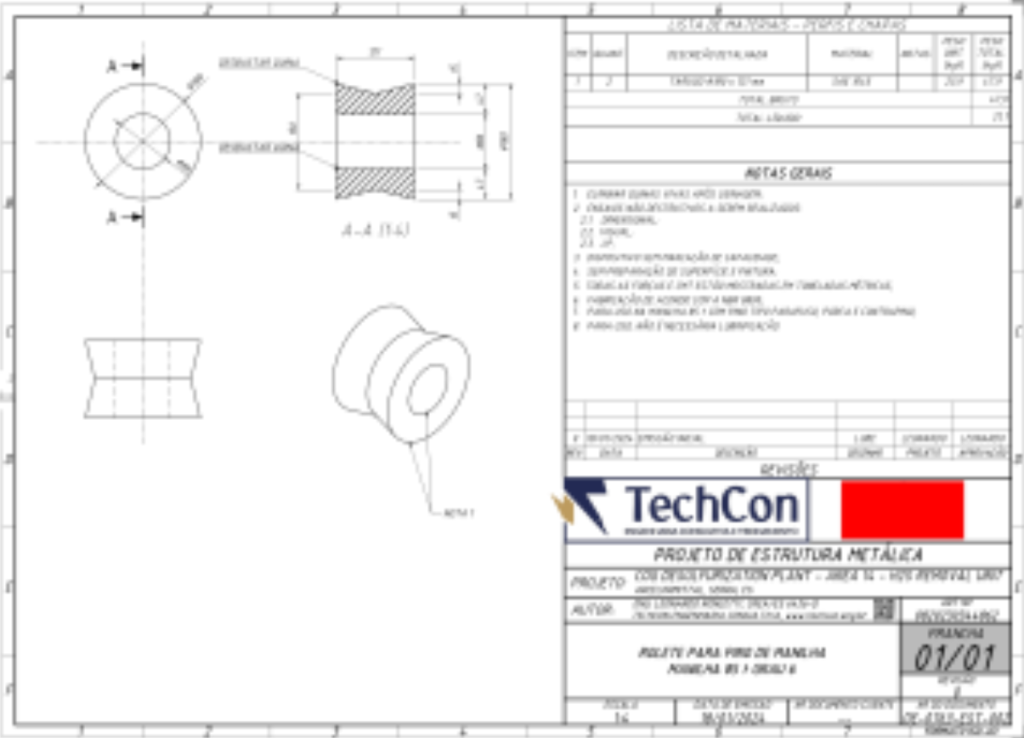
Centering on the axis: The use of rollers with a smooth “V” section is the ideal solution for wire rope slings. This geometry facilitates the automatic centering of the rope on the shackle axis, preventing it from shifting laterally and causing unbalanced forces or excessive wear.
Compatibility with slings: For lifting with textile slings, the recommendation is to use flat-faced rollers. This ensures that the pressure is distributed uniformly across the entire width of the sling, preventing fiber crushing and edge bunching.
Geometry and materials: Regardless of the profile (“V” or flat), the surface must be smooth and free of sharp edges. Polished steel or aluminum rollers are preferred to minimize friction and protect the integrity of the metallic or synthetic material.
The full article can be read in Crane Brasil magazine, issue no. 100.